










Don’t Believe Everything You Think – When Your Mind’s GPS Gets It Wrong
06/10/2025
Surgery, Function, and the Brain: 72 Hours Post-Op: Protection, Patience & “The Zipper”
01/03/2026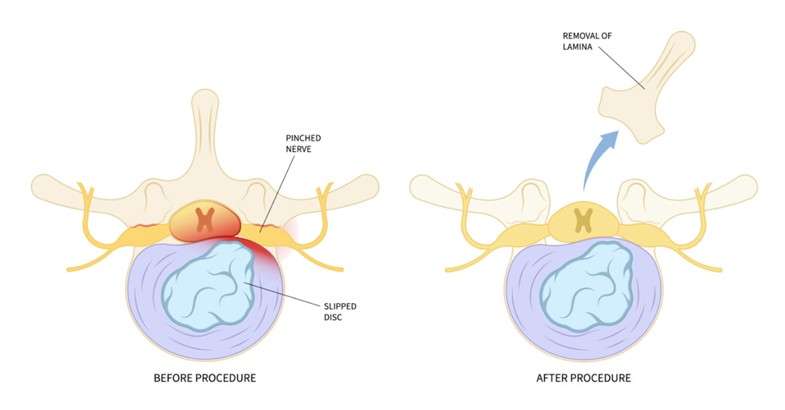
Surgery, Function, and the Brain
Starting This Journey
This is the first in a series of "Surgery, Function, and the Brain" blogs on Maria's recent surgical experience.
Brain function after surgery is rarely discussed in practical terms — yet it shapes recovery, behaviour, emotional regulation, and daily functioning. This journey explores what happens when the brain and body must recalibrate after a significant medical intervention.
I’m starting this blog in the lead-up to my spinal surgery — a laminectomy at L4–5 and L5–S1 — scheduled Thursday 26 February 2026.
I plan to write every few days, documenting recovery, function, pain, and what actually happens in the nervous system when we go through something like this.
Not as a “patient diary,” and not as a hero story.
More as a real-time experiment.
Choosing a surgeon (through a pain lens)
I work in the pain field, so choosing a neurosurgeon wasn’t just about technical skill.
It was about philosophy.
I wanted someone who operates for functional improvement, not simply to “fix a scan.”
Someone well regarded by both patients and colleagues.
Someone conservative in decision-making.
That led me to Dr Adam Wells in Adelaide.
The final piece — and one that felt quietly meaningful — was that his mentor was my previous spine surgeon, now retired. That surgeon’s philosophy shaped how I’ve always thought about recovery.
After my earlier surgery, he encouraged me to fly, jump, white-water raft, ski, and canyon once I had recovered.

Not because I was “like new.”
But because I was human — and humans adapt.
Recovery is biological, not mechanical.
Pain isn’t the main issue
Interestingly, I don’t have much pain.
What I do have are persistent neurological symptoms.
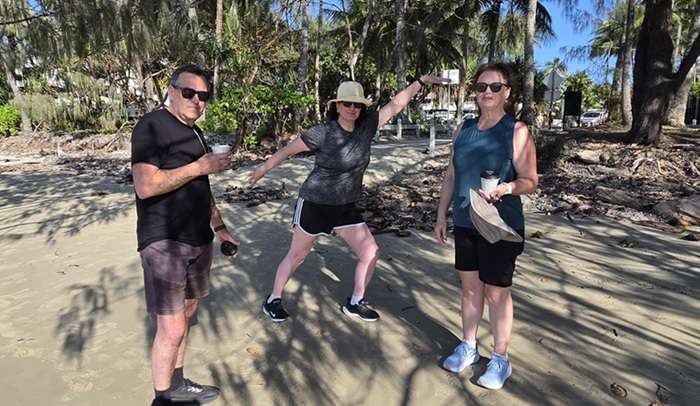
They’ve stayed with me despite high levels of activity — including a recent four-week trip through France and Italy, where I walked 8,000–14,000 steps a day and even skied in the Alps under the shadow of the Matterhorn.

Functionally, I can do a lot.
Neurologically, something is still not right.
That mismatch is part of why surgery now makes sense.
Night pain and the “half-asleep brain”
One thing I’ve noticed is pain when I wake at night to go to the bathroom.
- Not during the day.
- Not when moving.
- But in that half-asleep state.
My working hypothesis is simple: when the brain is still partially offline, the part responsible for threat detection isn’t reassured yet. It defaults to “danger.”
Once I’m fully awake and moving, the pain settles.
I often find myself having a quiet internal conversation:
“You know what’s happening. We’re safe. We’re not about to lift 50 kilos. There’s no threat here.”
And the system settles.

Treating surgery as an experiment
I’m approaching this surgery deliberately.
- Not passively.
- Not fearfully.
- And not as a test of toughness.
As an experiment in:
- function
- nervous system responses
- brain retraining in the acute phase
- how much pain medication is actually necessary
I plan to use the same strategies I teach: reassurance, graded movement, and nervous system safety cues.
If medication is needed, I’ll use it.
If it isn’t, I won’t.
This isn’t about being a hero.
It’s about staying in conversation with the brain.
- “We are safe.”
- “This is expected.”
- “Pain doesn’t mean danger.”
Recovery won’t mean “like new”
One belief I carry into this is that recovery is not restoration to a factory setting.
Bodies are biological systems. They heal, adapt, compensate, and reorganise. Recovered does not mean identical.
It means functional, capable, and safe again.
And sometimes — stronger in ways that aren’t obvious on imaging.
What comes next
Surgery is Thursday 26th February.
From here, I’ll document:
- the immediate post-operative phase
- what happens with pain vs neurological symptoms
- the role of expectation and fear
- what movement looks like early on
- what helps (and what doesn’t)
This isn’t just my recovery.
It’s a window into how brains, bodies, and function interact when something structural and neurological intersect.
This piece examines brain function after surgery through a real-world lens — highlighting cognitive shifts, emotional responses, and the gradual rebuilding of functional capacity that defines meaningful recovery.
The second in Maria's series of "Surgery, Function, and the Brain" blogs, on her recent surgical experience, is 72 Hours Post-Op: Protection, Patience & “The Zipper”.