











My Journey into Art: Discovering My Creative Voice – Reflections on Inspiration and Early Influences
12/06/2026
When Your Brain’s Smoke Alarm Won’t Switch Off
07/07/2026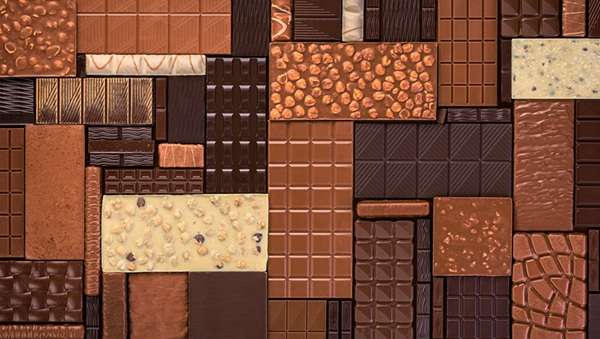
Mindful Chocolate Eating for Mental Health
World Chocolate Day 7 July 2026
Mindful chocolate eating may sound like an excuse to eat chocolate, but it is actually a simple way to practise slowing down, noticing, tasting and making conscious choices. For many people, chocolate is tangled up with cravings, comfort, reward, guilt and all-or-nothing thinking. Rather than banning it, one or two squares of chocolate can become a practical mindfulness exercise that helps us notice what we are really needing, without turning food into a moral issue.
Today is World Chocolate Day, which feels like a very good reason to talk about chocolate, cravings, guilt, health, mindfulness and why telling a chocoholic to “just stop eating chocolate” is often not the brilliant psychological strategy people think it is.
At Paragon PsychConnect, we are very interested in how the brain works in real life, not just in theory. Real life is messy and people get tired, stressed, overwhelmed, hormonal, lonely, bored, sad, frustrated and sometimes just in need of something that feels comforting. For many people, chocolate fits into that category. It is not just sugar and cocoa. It can be pleasure, reward, routine, memory, comfort and a little moment of “I need something nice now.”
My Relationship With Chocolate
I also understand this personally. When I was growing up, my father used chocolate as a major reward, so my brain became very tuned in to the message that “chocolate means I have been good.” Thankfully, books also fell into that category, so I became a bookworm as well — and I still am to this day. Chocolate and books were both treats, both rewards, and both associated with something positive.
Later in life, I married an insulin-dependent diabetic who was also very drawn to sugar. When we met, I had around 100 cookbooks. Ninety-nine were about desserts and one was about real food. I had always wanted to be a pâtissier, so sugar, desserts and chocolate were very much part of my world. However, I realised fairly quickly that if I did not retrain my own brain around chocolate and sugar, we were going to have a serious problem in the house. As I used to joke, he would end up in a diabetic coma every week.

So I made a deliberate decision to change my relationship with chocolate. I spent a concentrated 48 hours eating chocolate mindfully. I did not ban it. I did not shame myself for wanting it. I slowed the whole process down and paid close attention to the taste, texture, smell and richness of the chocolate. What I discovered surprised me. When I really paid attention, I could not eat more than one square. The “chocolatiness” was overwhelming. It was beautiful, but it was also enough.
That experience changed something for me. I also decided to buy the best chocolate I could afford, because I was eating so little of it. Chocolate was no longer something I had to chase, restrict, secretly overeat or treat as a reward for being “good.” It became part of life’s taste experiences. Something to enjoy. Something to notice. Something to savour. Not something to battle.
My current partner of more than 20 years is also a chocoholic, but he is a good example of why we need to be careful about making chocolate the villain. He goes to the gym five or six times a week, eats lots of fruit and vegetables, and generally has many healthy habits. Chocolate is part of his life, but it is not the whole story. This is why I think we need a more balanced conversation about chocolate, health and behaviour. It is rarely helpful to look at one food in isolation and make it the enemy.
Chocolate Is Not Broccoli — But It Is Not the Enemy
Of course, chocolate is not broccoli. I am not suggesting that a family-sized block of chocolate is the same as a plate of vegetables. But chocolate is also not the enemy. The problem is usually not chocolate itself. The problem is the relationship we develop with chocolate.
Many people have a very conflicted relationship with food, especially foods they have decided are “bad.” Once chocolate is placed in the forbidden category, the brain often becomes far more interested in it. This is not a character flaw - this is just how the brain works. When we tell ourselves we absolutely must not have something, the brain tends to keep checking whether the thing is still there, whether we still want it, whether we are allowed to have it, and whether we have failed yet.
Try not to think about chocolate. Do not think about the smell, the smooth texture, the little snap when you break off a square, or the way it melts slowly in your mouth. How are you going? Exactly.
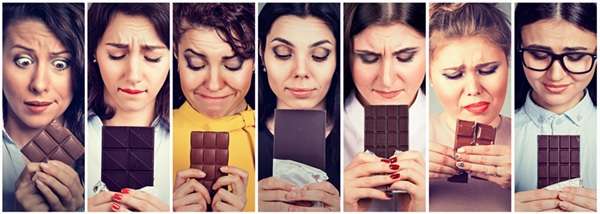
This is one of the reasons strict food rules can backfire. The more chocolate becomes forbidden, the more powerful it can become. Then people often swing between two extremes. They tell themselves, “I am never eating chocolate again,” and then, when they do eat it, the thought becomes, “Well, I have ruined it now, so I may as well eat the whole block.” That is not lack of willpower. That is the predictable result of deprivation, shame and all-or-nothing thinking.
Why Food Guilt Can Backfire
As psychologists, we are not particularly interested in helping people create more guilt. Most people already have enough of that. We are more interested in helping people build awareness, choice, emotional regulation and self-compassion. This is where chocolate can become surprisingly useful.
Instead of banning chocolate, we can change how we eat it. One or two squares of chocolate can become a small mindfulness exercise. Not because chocolate has magical healing powers, although some people may argue with me on that, but because it gives the brain a very clear opportunity to practise slowing down, noticing, tasting, pausing and being present.
What is Mindful Chocolate Eating
Mindfulness does not mean emptying your mind or sitting cross-legged on a mountain looking serene. Most of us do not live on a mountain and some of us would be thinking about emails, laundry, dinner and whether we left the oven on. Mindfulness is simply training attention. It is noticing what is happening right now, without rushing to judge it, fix it, avoid it or turn it into a battle.
A mindful chocolate exercise may only take two or three minutes, but that is part of why it works. Many people tell themselves they should meditate for 30 minutes a day. Then they do nothing, because 30 minutes feels too hard or too much like another job on the list. A small practice that is actually repeated is often more useful than an impressive practice that never happens.
How to Practise Mindful Chocolate Eating
This does not need to be complicated. You choose one or two squares of chocolate. You sit down. You do not eat it while answering emails, scrolling your phone, driving, cooking dinner or mentally rehearsing tomorrow’s problems. You look at it first and notice the colour, shape, texture and smell. Then you take a small bite and let it sit on your tongue before chewing. Notice the temperature. Notice when it starts to soften. Notice the flavour changing. Notice the urge to rush, swallow quickly or reach for the next piece.
You do not have to fight the urge. You just notice it. That is mindfulness.
Practical Strategies
This is very much the Paragon way. We like practical strategies that can be used in the real world. We like strategies people can actually use when they are tired, stressed, busy, pissed off, or human. We also like strategies that can be made part of normal life.
Mindful chocolate eating can help people learn the difference between craving, hunger, comfort-seeking and automatic behaviour. Sometimes we eat chocolate because we are hungry. Sometimes we eat it because we are exhausted. Sometimes we eat it because we are overwhelmed and our nervous system is looking for a quick way to feel better. Sometimes we eat it because it is there. Sometimes we eat it because we like chocolate. None of this needs to be treated as a crime.
What Am I Really Needing Right Now?
The useful question is not, “Am I bad for wanting chocolate?” The useful question is, “What am I needing right now?” Am I needing food, rest, comfort, a break, connection, pleasure, sleep or a nervous system reset? Sometimes the answer may still be chocolate. That is okay. The difference is that now it is a choice, not an automatic reaction followed by guilt.
When people slow down and actually taste chocolate, something interesting often happens. They enjoy it more and usually need less. When we eat quickly, the brain often does not register satisfaction properly. We can consume more but experience less. Mindful eating reverses this. We consume less but notice more. One or two squares eaten slowly may feel more satisfying than half a block eaten quickly while standing in the kitchen feeling annoyed with ourselves.
There is also something important about giving ourselves permission to enjoy small pleasures. The nervous system does not only need discipline. It also needs safety, comfort and moments of enjoyment. A small daily mindful chocolate exercise can teach the brain, “I can pause and enjoy something without losing control. I can have pleasure without guilt. I can notice cravings without being ruled by them. I can make choices instead of living under food rules.”
That is a much healthier message than, “I am bad because I like chocolate.”
Is Chocolate Healthy, or Is the Relationship the Issue?
The sensible answer is: it depends what we mean by healthy. Chocolate is not a treatment plan. It is not a substitute for sleep, movement, connection, therapy, nutrition or medical care. Dark chocolate and cocoa products may have some health-related benefits, but that does not mean more is better. The goal is not to turn chocolate into medicine. The goal is to allow chocolate to fit into life in a way that is moderate, enjoyable and psychologically healthy.
So today, in honour of World Chocolate Day, perhaps we can stop treating chocolate as a moral issue.
Chocolate is not good or bad - It is chocolate.
Tonight, try the mindful chocolate exercise. Choose one or two squares. Sit down. Slow down. Notice. Taste. Enjoy.
At Paragon PsychConnect, we believe mental health strategies work best when they are practical, realistic and occasionally a little bit delicious — which may explain why there is always chocolate in our team lunchroom. We support people to build practical mental health strategies for stress, anxiety, emotional regulation and everyday behaviour change.
Purpose. Practice. Persistence. And maybe chocolate.
Summary: Chocolate Without Guilt
Mindful chocolate eating is a simple, practical way to slow down automatic behaviour and notice cravings without shame. One or two squares of chocolate can help the brain practise pausing, tasting, choosing and enjoying without slipping into guilt or all-or-nothing thinking. Chocolate is not a treatment plan, but it can become a useful reminder that mental health strategies work best when they are realistic, repeatable and human.
Need Help With Mental Health Strategies?
If you would like help with developing your mental health strategies, give Angela a call on (08) 7095 3484, or send us a message, and come and see a psychologist at Paragon PsychConnect.
Explore More Maria Blogs
Read more mental health blogs by Maria at Paragon PsychConnect.
Explore Our Related Programs
- Anxiety / Meerkat Anxiety Program
- SOMNI Sleep Program, relevant to stress and regulation
Further References
- Healthdirect Australia - Mindfulness
- Healthdirect Australia – Food, Drink and Mental Health
- Australian dietary guidelines
Disclaimer
This blog provides general information only and is not a substitute for individual psychological, dietetic or medical advice.