






Six Months Post-Op: I’ve Stopped Thinking About My Back
06/09/2026
The Secret to Living Longer Might Be Simpler Than We Think
Perhaps We Just Need Each Other
What if one of the secrets to living a longer, healthier and happier life isn't found in an expensive supplement, a complicated exercise regime or the latest anti-ageing treatment, but in something as ordinary as having people to share our lives with?
Research into social connection and longevity is raising some fascinating questions about the importance of friendship, family, community and belonging. A remarkable little village in Sardinia, Italy, provides a particularly interesting example.
What Can a Sardinian Village Teach Us About Longevity?
What can a little village in Sardinia teach us about mental health, loneliness and living a longer, happier life? Perhaps more than we realise.
I recently came across a fascinating article in National Geographic about a small village in Sardinia, Italy, called Bolotana.
It caught my attention because researchers have discovered something rather extraordinary. People in this little mountain village appear to be living exceptionally long lives, particularly the women.
And we're not talking about people spending their lives in gyms, following complicated diets, taking handfuls of supplements or obsessing about their health.
Quite the opposite.
They eat relatively simple food, walk everywhere, grow vegetables, spend time with family and remain involved in their communities well into old age. In other words, they seem to be doing many of the things that modern society has gradually moved away from.
As a psychologist who has worked with people for more than 30 years, I find this particularly interesting. Because while everyone seems to be searching for the secret to living longer, I think we sometimes overlook something fundamental.
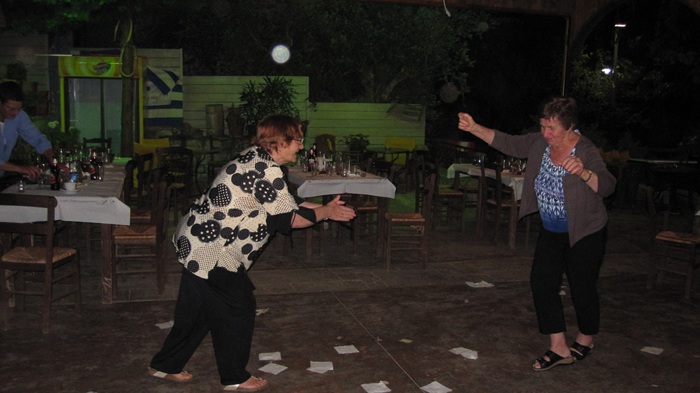
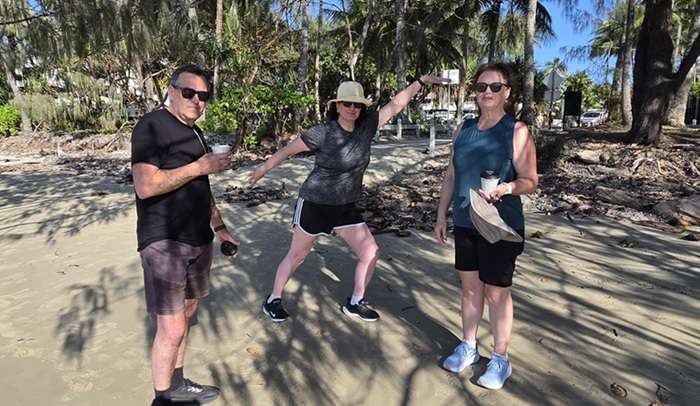
My Mum (83 yrs old) on the right and Aunt (76 yrs old) dancing at the Bouzouki on a trip to Greece in 2013 – it was 2am and they were packing up but these two would not stop singing and dancing. What a night we all had!!!
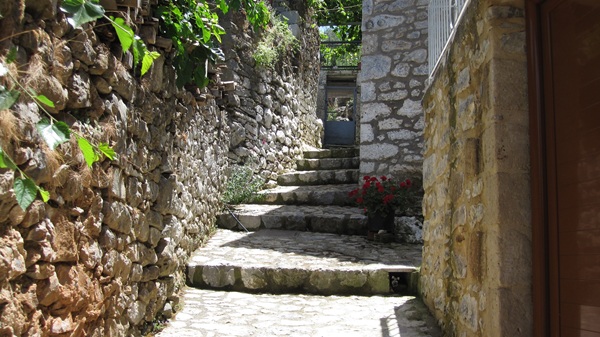
Social Connection and Longevity: What Does the Research Say?
Human beings are social creatures. We need other people. And perhaps we need them far more than we realise.
The research, published in October 2026 in the scientific journal Frontiers in Aging, examined longevity in Bolotana, a village of approximately 2,300 people. The findings were remarkable.
Researchers estimated that women who reached the age of 70 had approximately a 14% probability of surviving to 100. That was more than three times the corresponding estimate for American women.
The researchers are now considering whether Bolotana might qualify as another of the world's famous Blue Zones — places where people demonstrate exceptional longevity.
Other recognised Blue Zones include Okinawa in Japan and Ikaria in Greece.
Now, before everyone rushes out to buy olive oil and move to Sardinia (or Ikaria), we need to recognise that the research is still developing. The findings concern longevity, and the researchers have not established precisely which factors explain it.
Nevertheless, the lifestyles of these communities provide some fascinating food for thought. People generally eat traditional Mediterranean-style diets, walk regularly, remain physically active through everyday activities and maintain close family and community relationships. They also appear to have something that many Australians are increasingly missing.
A sense of belonging.
And that brings me to something I feel quite strongly about.
Loneliness: One of Our Most Serious Mental Health Problems
I have long believed that loneliness is one of the most underestimated contributors to poor mental health. And the scientific evidence increasingly supports that concern. Loneliness and social isolation are significant risk factors for depression, anxiety, psychological distress and poorer physical health.
The World Health Organization's 2025 report on social connection estimated that approximately one in six people worldwide experiences loneliness.
It also estimated that loneliness is associated with approximately 871,000 deaths globally each year.
That is an extraordinary figure.
Here in Australia, the Australian Bureau of Statistics reported that approximately 17% of Australians aged 15 and over often felt lonely in 2023.
And loneliness is not simply an issue affecting older people.
Young adults, people experiencing relationship breakdowns, individuals living with chronic pain or disability, people who are unemployed and those who have become disconnected from their communities can all experience profound loneliness.
I see this regularly in clinical practice.
Sometimes people present with anxiety or depression, but when we explore what is happening in their lives, we discover that they have become increasingly isolated.
They may have stopped working following an injury. They may have lost friendships. They may be living alone. They may have experienced a marriage breakdown.
Or they may simply have reached a point where their world has become smaller and smaller.
And here's something else worth remembering.
Can You Feel Lonely Even When Surrounded by People?
Loneliness is not necessarily about how many people you know. It is about whether you feel genuinely connected, understood and valued. Research consistently identifies loneliness and poor social connection as important predictors of psychological wellbeing. That does not mean loneliness is the single biggest cause of mental illness. Mental health is much more complicated than that.
But it certainly deserves far more attention than it receives.
Does Australia Need a Minister for Loneliness?
Perhaps Australia Needs a Minister for Loneliness!
I have said this before, and I will say it again.
Perhaps Australia needs a Minister for Loneliness — not just Ministers for Sport!
Now, don't misunderstand me. I think sport is wonderful. Physical activity is enormously beneficial for mental and physical health. But why do we place so much emphasis on organised sport while giving comparatively little attention to the social disconnection experienced by so many Australians? We spend enormous amounts of money encouraging people to exercise, lose weight and improve their physical fitness. All worthwhile objectives.
But what about encouraging people to make friends?
What about helping older Australians remain connected to their communities?
What about people who have lost their jobs, become disabled, experienced bereavement or simply don't have anyone to share a cup of coffee with?
What about the person who goes home every night to an empty house and doesn't speak to another human being until the following day?
The United Kingdom recognised the seriousness of this issue when it appointed a Minister for Loneliness in 2018.
I think Australia should give serious consideration to doing something similar. Not because we need another politician with an impressive title, but because loneliness deserves coordinated national attention. We need to stop treating social connection as a pleasant optional extra.
It is an important part of our psychological health.
What Happened to Our Sense of Community?
Perhaps my Greek background influences how I think about this. Growing up, family and community were central to everyday life. People visited each other (and used the key you had under the doormat to let themselves in and drop off the fruit, vegies, cake, etc that they had brought for the visit). This was Renmark in the Riverland in the 1970’s and 1980s.
Neighbours knew one another. Food was shared. There were family gatherings, celebrations, arguments, laughter and plenty of unsolicited advice!
And while those communities were certainly not perfect, people generally had a sense that they belonged somewhere. You didn't necessarily need to make an appointment three weeks in advance to have a cup of coffee with someone. You simply visited.
Today, we have technology that allows us to communicate with people anywhere in the world, yet many of us feel increasingly disconnected from the people living next door.
We have hundreds of Facebook friends but sometimes nobody to telephone when we are having a difficult day. We send messages instead of having conversations. We watch other people's lives on social media rather than participating in our own. And we have become extraordinarily busy.
Too busy to visit. Too busy to sit and talk. Too busy to check on someone.
Of course, modern life has brought enormous benefits. Technology allows us to maintain relationships across distances, and online communities can provide valuable support.
But I wonder whether, somewhere along the way, we have underestimated the psychological importance of ordinary human interaction.
The Psychology of Belonging and Human Connection
From a psychological perspective, our need for belonging is fundamental. We develop our sense of identity, security and self-worth partly through our relationships with others. Positive social connections can provide emotional support, help us manage stress, encourage healthier behaviours and give us a sense of purpose.
When those connections disappear, people can become increasingly vulnerable.
For example, someone who experiences a workplace injury may lose far more than their income. They may lose their daily routine, friendships with colleagues, professional identity and sense of contribution. Someone living with chronic pain may gradually stop attending social activities because they are worried about aggravating their symptoms.
An older person who stops driving may lose independence and access to friends.
A person experiencing anxiety may begin avoiding situations that previously brought enjoyment.
Over time, avoidance can become a vicious cycle. The less we participate, the more difficult participation becomes. And the smaller our world becomes, the more isolated we may feel.
This is one reason why, at Paragon PsychConnect, we place considerable emphasis on helping people reconnect with meaningful activities rather than focusing exclusively on reducing symptoms.
Psychological recovery is not simply about obtaining a better score on a depression or anxiety questionnaire.
It is also about getting back to living.
Perhaps the Sardinians Have Something Right
Returning to Bolotana, one of the most interesting aspects of the National Geographic investigation was the suggestion that women may benefit from shared household responsibilities and strong family relationships.
Researchers have proposed that, compared with some other traditional Sardinian communities, men in Bolotana may be more involved in domestic responsibilities, potentially reducing women's daily stress.
It is an interesting hypothesis, although it has not yet been scientifically established as an explanation for their exceptional longevity.
Nevertheless, the broader message resonates with me.
Perhaps healthy ageing is not simply about what we eat or how much we exercise.
Perhaps it is also about how we live with one another. Having someone to talk to. Having a reason to get up in the morning. Feeling useful. Being part of something. Having people who notice when we are missing.
And, importantly, having people with whom we can laugh.
I have always believed that humour has an important place in psychological wellbeing. Life can be extraordinarily difficult, and sometimes the ability to share a laugh with another person provides a welcome moment of relief. We don't necessarily need elaborate activities or expensive holidays to experience connection. Sometimes a conversation over coffee is enough.
And don’t get me started about the Housing Crisis!!!
In 2023, Australian Institute of Family Studies reported that more than one in four (26%) households are now occupied by one person – up from 24% in 2016 and 18% in 1981. Australian Institute of Family Studies Media Release.
What the……!
When I was 7, I shared a bedroom with my Granny – it was blissful. I had her to myself for hours and we developed a spectacular connection where I could talk to her about anything and I mean anything and she would pass on her wonderful wisdom. I still have these conversations in my head on odd occasions.
What Can We Do Differently?
During Mental Health Month, I would encourage everyone to think about their social connections.
Not just their own, but those of the people around them.
Perhaps we could start by doing a few simple things.
- Pick up the telephone. Call someone you haven't spoken to for a while. Don't just send a text.
- Have a coffee with someone. It doesn't need to be an elaborate outing. Sometimes 30 minutes of genuine conversation can make a difference.
- Join something. A gardening club, walking group, book club, community organisation, volunteering activity or local interest group.
- Reconnect with an old friend. We often assume people are too busy or wouldn't be interested. Sometimes they are thinking exactly the same thing.
- Check on someone who lives alone. Particularly older neighbours, people experiencing illness or those who have recently experienced a significant life change.
- Make time for family. Not every family relationship is supportive or healthy, and maintaining appropriate boundaries is important. But where relationships are positive, investing time in them can be enormously rewarding.
And perhaps most importantly, be willing to initiate contact.
Friendships and relationships require effort. They don't always happen automatically, particularly as we get older.
And if loneliness has become overwhelming, or anxiety and depression are preventing you from reconnecting, psychological support can help.
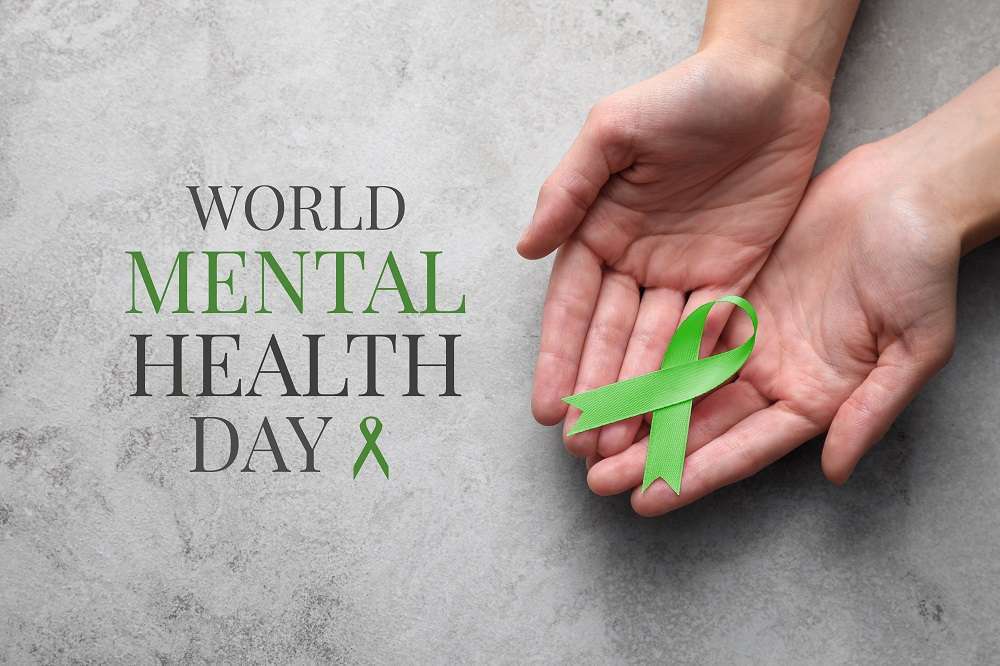
Mental Health Month 2026: Together We Thrive
This year's Australian Mental Health Month theme is Together We Thrive.
I think that is particularly appropriate. Because mental health is not simply an individual responsibility. Yes, we can learn strategies to manage our thoughts, emotions and behaviours.
We can improve our sleep, exercise regularly and develop healthier coping skills.
But we also need environments and communities that support psychological wellbeing.
We need workplaces that foster inclusion. We need communities where older people remain valued. We need opportunities for people living with disability or chronic illness to participate. And we need to recognise that social connection is not a luxury.
It is an important human need.
At Paragon PsychConnect, we see the benefits of helping people rebuild confidence, increase independence and reconnect with their communities.
Whether through individual psychological treatment, rehabilitation or group-based activities, our aim is not simply to help people feel better.
It is to help them get back to living meaningful and fulfilling lives.
Key Takeaways
- Human connection matters for our health. Research into social connection and longevity links stronger social relationships with better psychological wellbeing, improved physical health and reduced risk of premature death.
- Loneliness is more than feeling alone. You can be surrounded by family, friends or colleagues and still feel profoundly lonely. What matters is the quality and meaning of our relationships.
- Loneliness is a significant public health concern. The World Health Organization estimates that approximately one in six people worldwide experiences loneliness, which is associated with substantial health risks.
- Healthy ageing involves more than diet and exercise. Physical activity, nutrition and healthcare are important, but friendships, purpose, community participation and meaningful relationships also deserve attention.
- Social isolation can develop gradually. Retirement, illness, workplace injury, chronic pain, bereavement or relationship breakdown may reduce social participation and create a cycle of loneliness and withdrawal.
- Small acts of connection matter. A telephone call, sharing a meal, joining a community activity or checking on a neighbour can provide opportunities to rebuild meaningful relationships.
- Psychological wellbeing is about more than reducing symptoms. At Paragon PsychConnect, we believe recovery also involves restoring independence, confidence, social participation and enjoyment of life.
My Final Thought: A Life Worth Sharing
I don't know whether the people of Bolotana have discovered the secret to living to 100.
And I suspect there is no single secret. Genetics, diet, physical activity, healthcare, environment and many other factors undoubtedly contribute to longevity.
But perhaps these communities can remind us of something we already know, yet too often forget. We are not designed to live our lives in isolation. We need connection, companionship, purpose and a sense of belonging.
So, during Mental Health Month, perhaps we could all make a little more effort to connect with someone.
- Invite a neighbour for coffee.
- Visit an older relative.
- Join a community group.
- Telephone a friend.
- Or simply take the time to have a genuine conversation.
Because while we cannot guarantee that doing these things will help us live to 100, they may well help us live happier, healthier and more meaningful lives.
And isn't that what really matters?
As for me, I still think Australia needs a Minister for Loneliness.
We have Ministers responsible for sport because we recognise the importance of physical activity.
Surely our need for human connection deserves equally serious consideration.
After all, what is the point of living to 100 if we have nobody to share our life with?
Want to Learn More About Loneliness and Mental Health?
If this article has made you think about your own relationships, friendships or sense of belonging, you are certainly not alone.
Loneliness can affect people at any stage of life. It may emerge following retirement, illness, injury, relationship breakdown or major life changes. Sometimes it develops so gradually that we do not realise how disconnected we have become.
The encouraging news is that meaningful social connection can be rebuilt.
Start with something manageable. Telephone an old friend, join a local walking or gardening group, reconnect with an activity you once enjoyed or simply make time for a genuine conversation.
If anxiety, depression, low confidence or longstanding social withdrawal are making it difficult to reconnect, a psychologist can help you identify the barriers and develop practical strategies to move forward.
At Paragon PsychConnect, our psychologists focus not only on reducing psychological distress but also on helping people rebuild confidence, improve their everyday functioning and reconnect with meaningful activities and relationships.
Because mental health is not simply about feeling less distressed. It is about getting back to living.
Feeling lonely, isolated or disconnected from the people and activities that once mattered to you? The psychologists at Paragon PsychConnect, can help you rebuild confidence, strengthen your social connections and work towards a more meaningful and fulfilling life.
Call our friendly team on (08) 7095 3484 or visit our Contact Us page to enquire about an appointment.
You do not have to work through loneliness on your own.
Related Paragon PsychConnect blogs
- Why Life Feels 'Flat' for So Many People Right Now
- Mental Health Month 2025: Coffee with a Psychologist
- International Day of Happiness 2023
Further Reading and References
- Frontiers in Aging (2026)
A new blue zone? Exceptional late-life survival in Bolotana, Sardinia.
Read the research - National Geographic (5 October 2026)
There's a New 'Blue Zone'—And It Holds Clues to Women's Longevity.
Read the article - World Health Organization (2025)
From loneliness to social connection: Charting a path to healthier societies.
WHO Commission on Social Connection - Australian Institute of Health and Welfare
Social isolation and loneliness.
Australian research and statistics - Australian Bureau of Statistics
Measuring What Matters: Social Connections.
Australian loneliness statistics - Mental Health Australia (2026)
Mental Health Month: Together We Thrive.
Mental Health Month 2026
Disclaimer
This blog provides general information only and is not a substitute for individual psychological or medical advice.
Treatment should be individualised and coordinated with relevant medical and allied health professionals. New, unexplained or substantially worsening pain should be medically assessed before beginning a new activity program.